

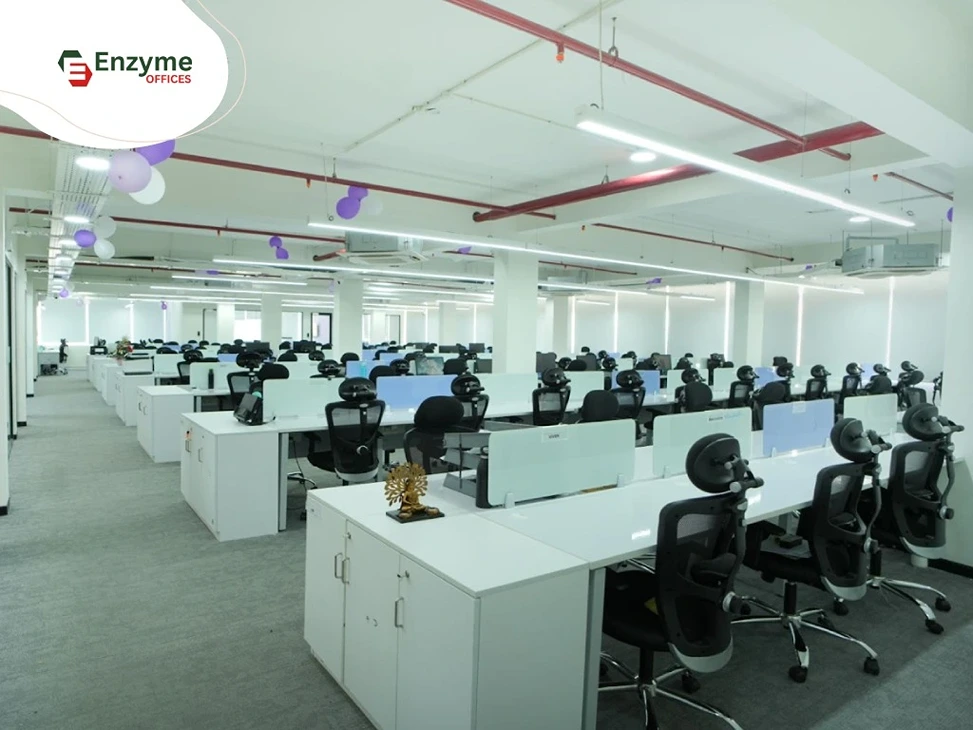
Choosing between traditional office space and managed office space is not just a cost decision. It is a growth decision that shapes how fast your business can move, scale, and operate efficiently.
TL;DR – 30 Seconds Quick Takeaway
- The Problem: Businesses comparing traditional and managed office space often focus only on rent, overlooking setup costs, day-to-day operations, and long-term flexibility.
- The Fix: Compare both models based on total cost, scalability, operational responsibility, and team needs.
- The Impact: Making the right workspace decision helps businesses control costs, scale faster, improve team productivity, and avoid long-term office commitments that can limit business flexibility and growth.
- Keep Reading To: Understand the real cost difference between traditional office space and managed offices, compare flexibility and operational demands, and identify which option best fits your current stage of growth.
According to the CBRE India Office Occupier Survey 2025, 85% of Indian companies plan to expand their office space over the next two years. However, many businesses still make workspace decisions without fully understanding the costs and operational responsibilities involved.
If you are comparing traditional and managed office space right now, this guide gives you a direct comparison so you can select the model that fits your business’ needs, not just the one that sounds good on paper.
What Is Traditional Office Space
Traditional office space is a workspace your company leases directly from a landlord. You lease the space, set it up, and manage everything yourself, from internet and maintenance to housekeeping and daily operations.
Traditional offices are leased for the long term. The tenant has to manage everything.
What Is Managed Office
Managed office spaces are private, dedicated workspaces operated by a third party. The operator manages the lease, office setup, and daily facilities. You pay a monthly fee and start working.
A managed office is exclusive to your company. Nobody else shares your office space, your meeting rooms, or your infrastructure. It works like your own private office, without the issues of managing long-term leases and operations.
Quick Comparison Between Managed Office Space and Traditional Office Space
Before choosing between managed office space and traditional office space, compare the real costs, flexibility, and operational responsibilities involved in each model.
Factor | Managed Office Space | Traditional Office Space |
Lease term | 12 to 36 months | 3 to 9 years |
Security deposit | 1 to 3 months | 6 to 12 months rent |
Fit-out cost | Zero | Rs. 800 to Rs. 2,500 per sq ft (your expense) |
Time to move in | 2 to 4 weeks | 3 to 6 months |
Monthly billing | Single invoice, fixed amount | Multiple vendors, variable costs |
Facility management | The operator handles it | Your team manages it |
Scalability | Adjust seats with notice | Requires lease renegotiation |
Customization | Possible with the right operator | Full control |
Multi-city expansion | One operator, multiple cities | Separate lease per city |
Advantages of Managed Office Space
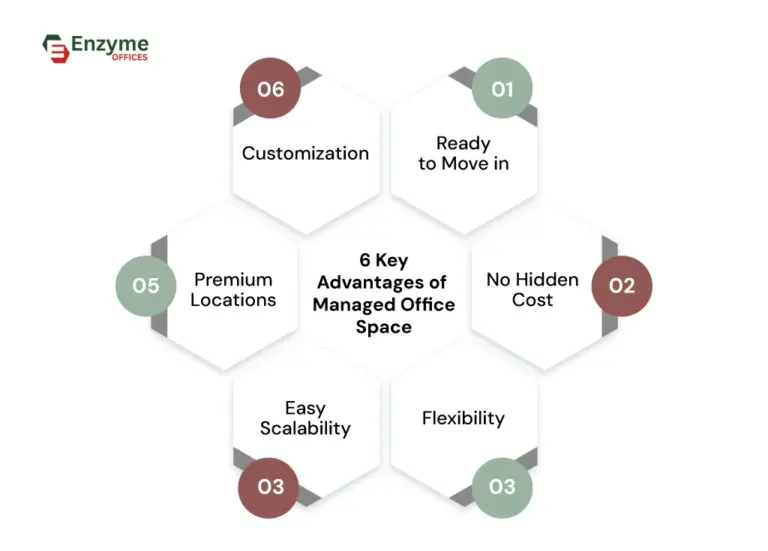
Managed office spaces are designed to reduce operational burden, giving growing businesses more flexibility, speed, and cost predictability.
1. Ready to Move in
Managed offices are move-in ready, with no construction delays or vendor coordination required. Your team can start working within days, not months.
2. No Hidden Costs
Rent, electricity, internet, housekeeping, maintenance, and security are usually included in one monthly bill, making budgeting and financial planning much simpler.
There are no unexpected expenses, no variable electricity expenses, everything is included.
3. Flexibility
A managed office lets you scale from 30 to 80 seats in the same city without a new lease. It also makes it easier to expand into new cities like Hyderabad without having to set up operations and vendor networks from the outset.
4. Easy Scalability
Managed offices make it easier to add or remove seats as your team evolves. It’s ideal for businesses in a growth or transition phase.
5. Premium Locations
Most managed offices are located in key business districts. It allows you to select a ready-to-use office space without heavy upfront investment.
6. Customization
This workspace model allow businesses to customize office space based on their requirements. For example, startups searching for flexible office space in HSR Layout can include private cabins, collaborative work zones, meeting rooms, branding elements, and scalable seating arrangements that align with their operational needs and team structure.
Advantages of Traditional Office Space
The traditional model is not the wrong choice. It is the right choice for a specific type of business in a specific situation.
1. Full Control
A traditional office gives you complete authority over design, layout, infrastructure, and operations. For large businesses like financial firms, law offices, and organizations in regulated industries often choose traditional offices because they need complete control over infrastructure and operations.
2. Long-Term Cost Efficiency
For companies with more than 500 employees and long-term stability, a traditional office can be more cost-effective over time once the setup and fit-out costs are spread out.
3. Better Security
Companies in sectors like BFSI, pharmaceutical R&D, and defense often need higher levels of control and security. Businesses that require compliance-specific infrastructure, certified data rooms, or private networks usually prefer traditional office spaces.
Managed Office Space vs. Traditional Office Space: Which is Better for Your Business?
The right choice depends on your team size, growth plans, budget, and how much operational flexibility your business needs.
Your Situation | Right Choice |
Team under 200, growing fast, hybrid work policy | Managed office space |
Need to be operational within 60 days | Managed office space |
Expanding to multiple cities in 24 months | Managed office space |
Limited upfront capital | Managed office space |
500+ stable headcount, 7+ year horizon, compliance-heavy sector | Traditional office space |
For most growing businesses, managed office space offers greater flexibility and faster scalability, while traditional offices are often better suited for large, stable enterprises with long-term requirements.
For instance, companies expanding into North Bangalore frequently choose flexible office space in hebbal because of its connectivity to Manyata Tech Park and the airport corridor.

Final Takeaway
Choosing between traditional office space and managed office space depends mainly on three things: your current business stage, how much operational complexity you are ready to own, and how much growth you expect in 2-3 years.
For most growing businesses, a managed office is the best choice, especially when the right operator delivers a fully customized space that feels completely tailored to your business.
Enzyme Offices provides fully managed offices, customized office spaces, and coworking solutions across Bangalore, Hyderabad, Mumbai, Pune, and Delhi/NCR.
Get in touch with Enzyme Offices today to find the right workspace type for your team size, budget, and growth plan.