

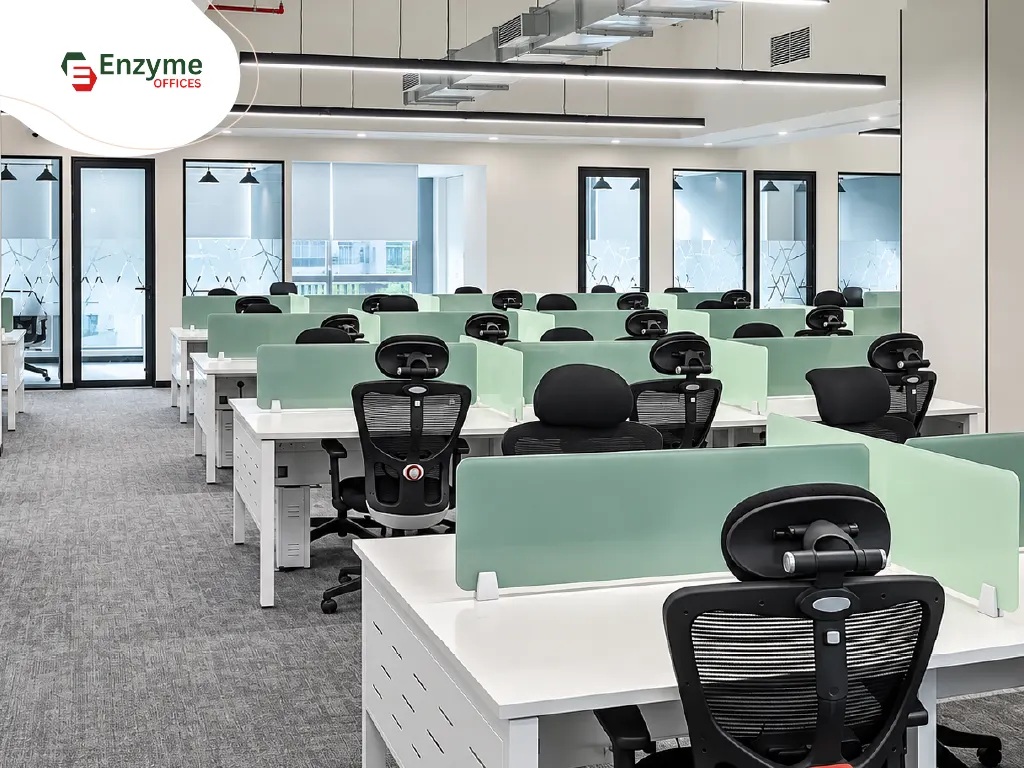
Managed offices in Baner give employees access to comfortable workspaces, dependable internet and power, and regular facility support. Unreliable Wi-Fi, limited meeting rooms, uncomfortable seating, and delayed maintenance can disrupt daily work and affect employee productivity.
A managed office supports better productivity through ready-to-use workspaces and day-to-day operational support, reducing the burden on businesses to manage office facilities themselves. This guide explores six ways managed offices in Baner improve workplace experience and what businesses should evaluate before choosing one.
TL;DR
- Workplace comfort, accessibility, infrastructure, and facilities management all influence employee experience.
- Managed office spaces reduce operational distractions by handling workplace setup and day-to-day facility management.
- Flexible office space helps companies accommodate different work styles, team structures, and growth requirements.
- Companies should measure employee experience using feedback, workplace usage patterns, and operational performance indicators.
Table of Contents
Why the workplace is important to workplace experience
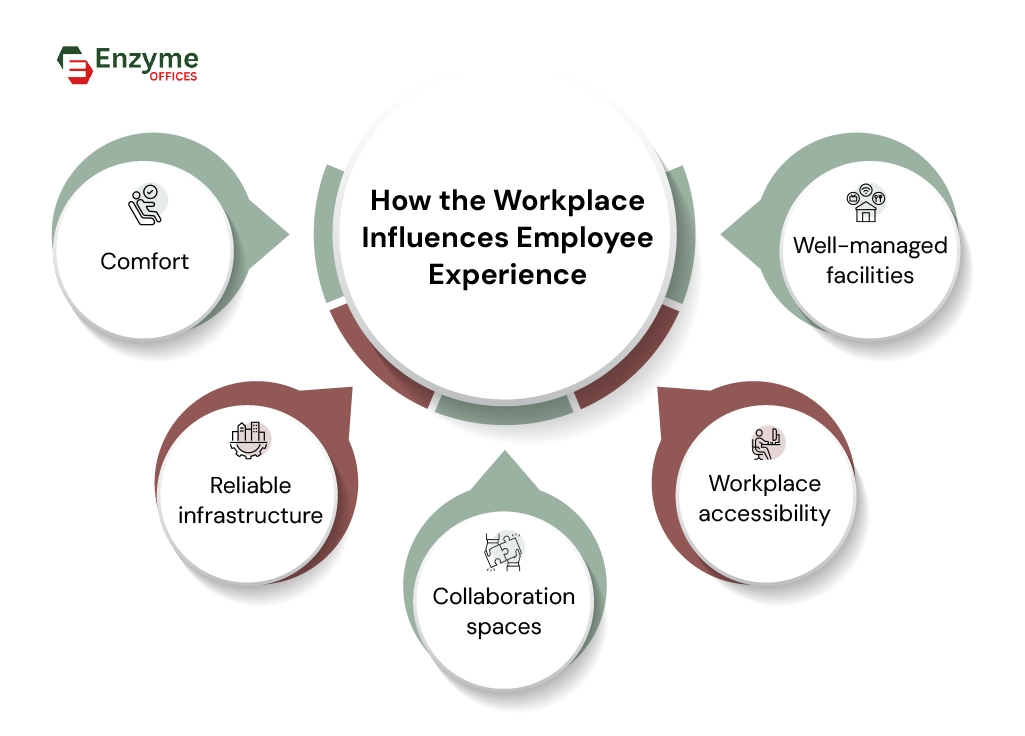
Employees interact with their work environment every day. A broken facility, poor internet connection, or lack of meeting space can interrupt work. When these issues are handled quickly, employees have fewer workplace problems to deal with.
• Workplace comfort
Employees spend several hours at their desks, so seating, temperature, lighting, and noise levels affect their comfort throughout the day. Uncomfortable chairs, poor lighting, and noisy surroundings can make it harder to concentrate, especially during tasks that require sustained attention. A comfortable workspace makes it easier for employees to focus on their work.
• Internet and power
Employees need internet access, uninterrupted power, and working meeting equipment to complete daily tasks. A slow connection can interrupt video calls, while power failures can delay work and affect access to essential systems. When these services work reliably, employees can complete their tasks without repeated technical interruptions.
• Collaboration spaces
Teams need dedicated spaces for meetings, project discussions, interviews, and client calls. Without suitable areas, employees may struggle to communicate effectively, hold private discussions, or work through ideas together. Appropriate collaboration spaces support team communication and make it easier to conduct discussions without disturbing employees working nearby.
• Workplace accessibility
Accessibility affects how convenient the workplace is for employees. Location, surrounding amenities, transportation options, and ease of access all contribute to the daily employee experience.
A workplace that is easier to reach can reduce some of the stress associated with commuting and office attendance. For businesses considering office space in Baner, accessibility becomes an important part of workplace planning.
• Well-managed facilities
Good facility management keeps everyday problems such as maintenance, cleanliness, and security from becoming employee concerns. Cleanliness, security, maintenance, and responsive facility support help prevent minor issues from becoming ongoing problems.
Employees notice when the office is clean, equipment works, and maintenance issues are dealt with quickly. Reliable facilities management allows employees to focus on work instead of workplace disruptions.
5 ways managed offices in Baner improve workplace experience
Managed offices in Baner can enhance workplace experience by providing ready-to-use workplaces, operational support, flexible environments, and infrastructure that supports daily work.
1. Ready-to-use workplace
A ready-to-use workplace reduces the disruption associated with setting up an office. Employees can move into an operational environment where essential infrastructure is already in place, allowing new teams to start working without waiting for office setup to be completed.
2. Fewer workplace problems
Managed office providers handle everyday operational responsibilities such as maintenance, housekeeping, security, and facility coordination. Employees can report workplace issues to the management team instead of having to coordinate repairs or follow up on facility requests themselves. This reduces the time and effort employees spend dealing with office-related problems.
3. Easier collaboration
Managed offices provide access to dedicated meeting rooms and shared discussion areas where employees can hold project meetings, client conversations, interviews, and planning sessions.
These facilities give teams suitable spaces for collaboration without requiring businesses to build and manage separate meeting areas themselves.
4. Adaptable workspaces
Teams change size, structure, and workspace needs over time. As teams grow or organizational structures evolve, workspace needs may change as well.
Companies may require additional desks, new team layouts, or different workspace configurations. A flexible office can make it easier to add desks, change layouts, or adjust team areas without moving to a new location.
5. Convenient location
Baner has a mix of restaurants, cafés, shops, and essential services around its commercial areas. Employees working in the locality can access nearby places for meals, shopping, and everyday needs without travelling far from the office. These amenities make it easier for employees to manage everyday activities around their work schedules.
Managed office vs traditional office: Which offers a better workplace experience
A managed office can provide a better workplace experience through ready-to-use workspaces, facility management and flexible office arrangements. A traditional office may suit companies that want greater control over office design, infrastructure and daily operations. The better option depends on employee needs and business requirements.
| Factor | Managed Office | Traditional Office |
| Workplace Readiness | Typically ready for occupancy | Requires setup and coordination |
| Facilities Management | Usually handled by provider | Managed by tenant |
| Workspace Flexibility | Often easier to adjust | Changes may require additional planning |
| Infrastructure Support | Generally included and maintained | Tenant responsibility |
| Collaboration Spaces | Commonly available | Must be planned and built |
| Customization | May have some limitations | Greater control over design |
| Scalability | Often easier to expand or adjust | Expansion may require relocation or redesign |
| Employee Convenience | Operational support reduces workplace administration | Depends on internal management capabilities |
Managed offices may suit companies that want workplace operations handled by a dedicated provider.
Traditional offices may suit organizations that require extensive customization, specialized workplace layouts, or greater control over facilities and operations. The best choice depends on business priorities, employee needs, and workplace strategy.
What to look for in a managed office for a better employee experience
Companies should look for a managed office with comfortable customized workspaces, reliable infrastructure, responsive facilities management, flexible layouts, good accessibility, and room to support team growth. These factors can reduce daily workplace issues and create a more convenient experience for employees.
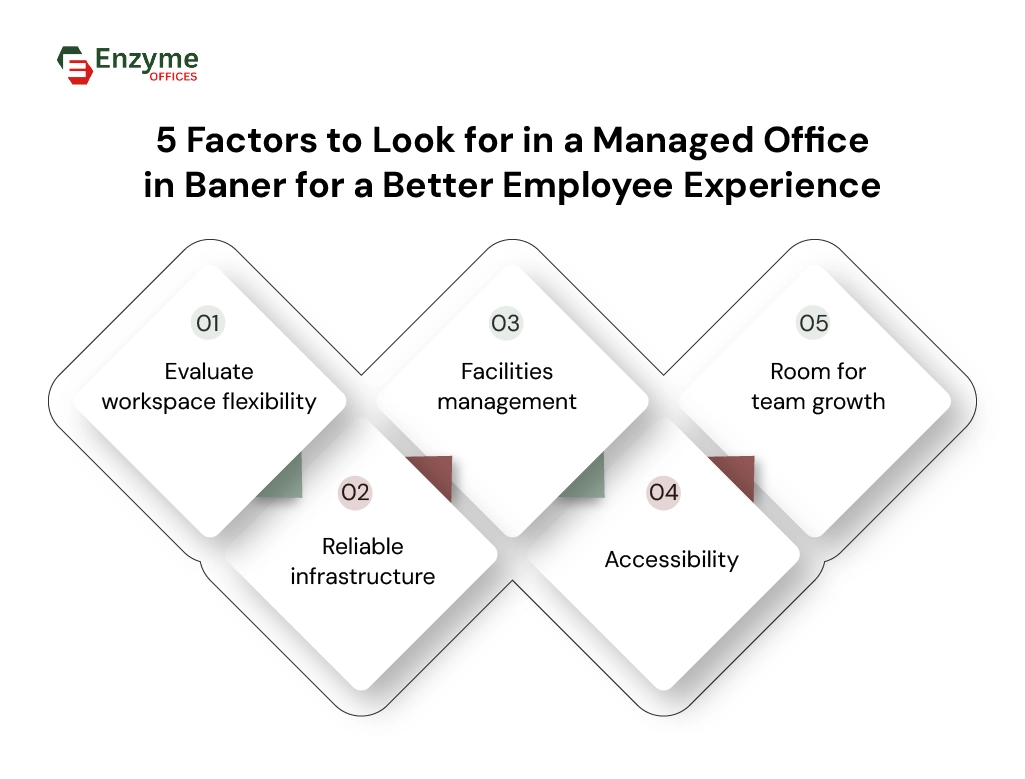
• Workspace choice
Companies should assess whether the workspace supports different types of work. Employees may require focused work areas, collaborative spaces, meeting rooms, and informal discussion zones.
The available environment should align with how teams actually work. A workplace that accommodates different work styles can support a broader range of employee needs.
• Infrastructure reliability
Infrastructure reliability should be verified before selecting a managed office. Businesses should assess internet connectivity, power systems, meeting technology, and workplace functionality.
Employees depend on these systems daily, making reliability an important consideration. Consistent infrastructure helps reduce avoidable work disruptions.
• Operational support
Before choosing a managed office, companies should check how the provider handles maintenance requests and facility-related issues. Ask about typical response times, how quickly problems are resolved, housekeeping schedules, and the process for reporting concerns. Clear service responsibilities and reliable issue-resolution processes can help prevent unresolved facility problems from affecting employees.
• Workspace customization
Workspace customization allows businesses to align the environment with their requirements. Organizations may need specific layouts, team arrangements, branding elements, or operational configurations.
Understanding what modifications are possible helps ensure the workspace remains suitable over time. Customization needs vary significantly between businesses.
• Location and accessibility
Location and accessibility affect daily employee convenience. Companies should consider commuting patterns, surrounding amenities, accessibility, and the practical experience of reaching the workplace.
These factors can influence how employees perceive the office environment. For businesses evaluating office space in Baner, location should be assessed from the employee’s perspective as well as the company’s.
• Ability to adapt as teams grow
The workspace should be capable of supporting future changes. Businesses rarely remain the same size indefinitely. Team growth, departmental changes, and evolving workplace strategies can all affect space requirements.
Evaluating flexibility in advance can reduce future workplace constraints.
How to measure whether your office is improving employee experience
Companies should integrate employee feedback, workplace usage data, and operational performance indicators to understand whether their office is improving employee experience.
Reviewing employee feedback alongside workplace data gives companies a clearer understanding of employee satisfaction and how well their office facilities are functioning.
• Employee feedback
Employee feedback provides direct insight into workplace experience. Organizations can gather input through surveys, interviews, pulse checks, and workplace discussions.
Questions can focus on comfort, facilities, accessibility, workspace choice, and overall workplace satisfaction. Regular feedback helps identify recurring workplace issues before they become larger concerns.
• Workplace and facilities metrics
Facilities metrics reveal how effectively the workplace operates. Organizations can track maintenance requests, issue-resolution times, facility complaints, recurring infrastructure problems, and meeting-room availability.
Tracking these metrics helps companies spot recurring facility issues, such as delayed maintenance, frequent equipment failures or unresolved service requests.
• Workspace usage
Workspace usage data helps companies understand how employees interact with the workplace. Employees frequently use occupied spaces because these areas meet their work needs If some areas remain unused, it may indicate that the layout or facilities do not match how employees prefer to work.
• Employee engagement indicators
Employee engagement indicators can provide additional context when evaluated alongside workplace feedback. Organizations may review participation rates, feedback trends, team collaboration patterns, and engagement survey responses.
These measures should be considered alongside workplace data rather than viewed in isolation. Office improvements may influence employee engagement, but engagement is affected by many factors beyond the workplace itself.
Final takeaway
Office conditions play a significant role in shaping employee experience. Comfort, accessibility, infrastructure, collaboration spaces, and facility management all influence how employees interact with their workplace each day.
For companies evaluating managed office space in Baner, the value comes from reducing operational complexity while providing a workplace that supports employees’ day-to-day needs. The right environment can help create a more consistent and convenient workplace experience.
If your team is assessing workplace requirements, growth plans, or office needs in Baner, Enzyme can help you evaluate what type of workspace aligns best with your employees and business goals.
Contact us today!
Frequently asked questions
1. What does employee experience mean in a workplace?
Employee experience refers to how employees feel about and interact with their workplace throughout the workday. It includes factors such as office comfort, facilities, accessibility, work tools, team interactions and the overall environment. These factors can influence employee satisfaction and productivity.
2. How does a managed office improve workplace experience?
A managed office provides ready-to-use infrastructure, facility management and workplace support. Employees can access essential facilities without dealing with common office issues such as maintenance requests or equipment problems. This helps create a comfortable work environment and reduces day-to-day disruptions.
3. How does office design affect employee engagement?
Office design affects how employees work, communicate and interact with colleagues. Comfortable seating, accessible meeting rooms and spaces for collaboration can support daily tasks and team discussions. A poorly planned layout may make communication and routine work more difficult.
4. What should I look for in an office space in Baner?
When evaluating an office space in Baner, consider its location, transport access, workplace comfort, internet reliability and available facilities. Check whether the office has suitable meeting rooms, common areas and nearby dining options to support employees’ everyday needs.
5. Can a managed office accommodate a growing team?
Yes, a managed office can accommodate a growing team if the provider offers flexible workspace arrangements. Companies can discuss additional seats, private office requirements and facility needs as their teams expand. Before signing an agreement, check the provider’s capacity and terms for changes.
6. What facilities does Enzyme offer at its managed office in Baner?
Enzyme Office Ruby in Baner offers dedicated desks, private cabins, meeting rooms, high-speed internet, centralized air conditioning, power backup, and 24/7 building access. The managed workspace also provides facility management and IT support to help businesses maintain a comfortable and functional work environment.