

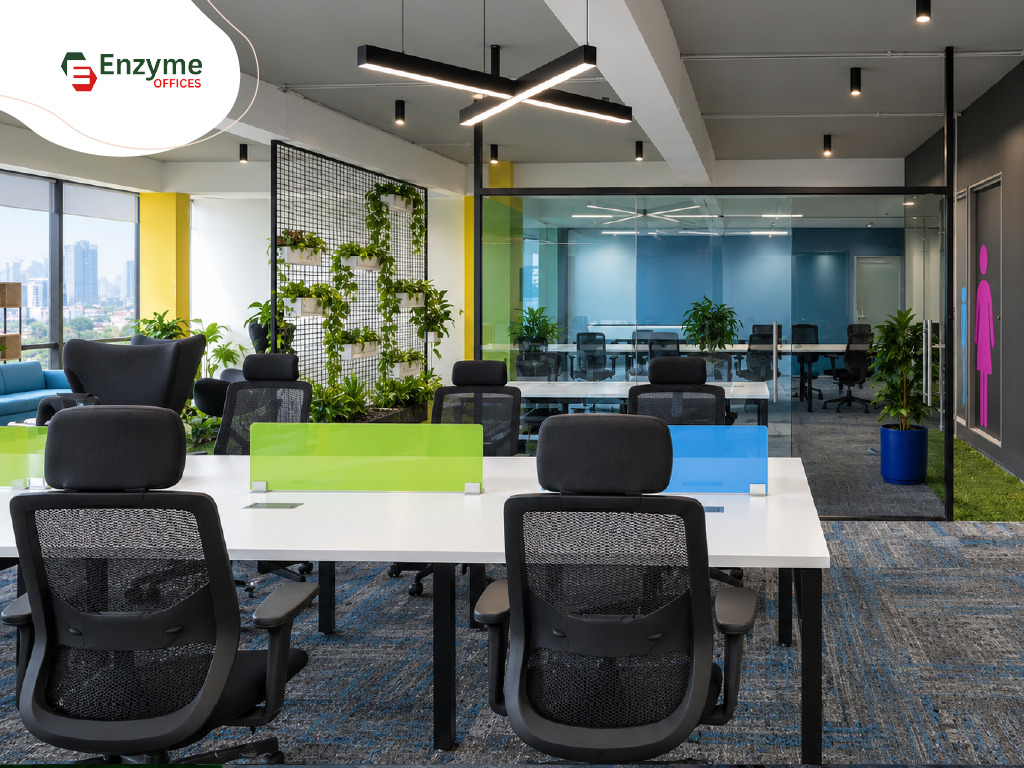
Starting a business means balancing growth plans with practical decisions about where and how your team works. Office costs, hiring, client meetings, employee productivity, and the need for flexibility can quickly become difficult to manage in a traditional office setup. This is where the benefits of a coworking space become relevant for startups that need a professional workplace without taking on unnecessary operational complexity.
Coworking spaces for startups provide access to workstations, meeting facilities, shared amenities, and professional business environments under flexible arrangements. This setup allows founders and employees to focus on the business while adjusting their workspace as the team grows.
| TL;DR: Coworking spaces can help startups improve productivity, control workspace costs, build professional connections, and adapt their office setup as the business grows. They also provide access to amenities and a professional environment without requiring startups to manage every aspect of a traditional office. |
Table of contents
|
What is a coworking space?
A coworking space is a shared professional workplace where individuals, freelancers, startups, and established businesses work from the same facility. Depending on their needs, members may choose shared desks, dedicated desks, private cabins, meeting rooms, or larger managed office spaces.
The flex sector accounted for 28.4% of India’s office leasing activity in Q2 2026, according to JLL India. For startups, this model offers more flexibility than committing to a conventional office lease.
Instead of investing heavily in furniture, internet infrastructure, reception services, maintenance, and other workplace requirements, businesses can move into a workspace where these facilities are already available.
11 Key benefits of coworking spaces for growing startups
Coworking spaces for startups is ideal for businesses where workspace requirements change frequently. A two-person team may need only a few desks today but may require a private office or additional workstations after hiring new employees.
1. Maximize productivity
Your work environment can directly influence how easily your team maintains focus. Working from home may bring distractions, while cafés may lack the privacy and infrastructure required for business tasks.
Coworking spaces provide dedicated professional environments where employees can separate work responsibilities from personal routines. Having a defined place to work can create greater structure throughout the day.
For startup teams, this can support:
- Better concentration during working hours
- Fewer household distractions
- Dedicated areas for focused work
- Easier collaboration between team members
- Access to meeting spaces when required
A structured workplace makes it easier for founders and employees to maintain consistent working habits as the company develops.
2. Flexible workspace solution
Startup requirements rarely remain the same for long. Hiring plans, project sizes, remote work policies, and client requirements can all change within months.
One of the key benefits of working in a coworking space is the flexibility to choose a workspace as per your current needs instead of committing to a fixed office for several years.
For example, a coworking space in Hebbal can give a growing startup in Bangalore access to the workspace it needs today and allows them to scale as the team expands.
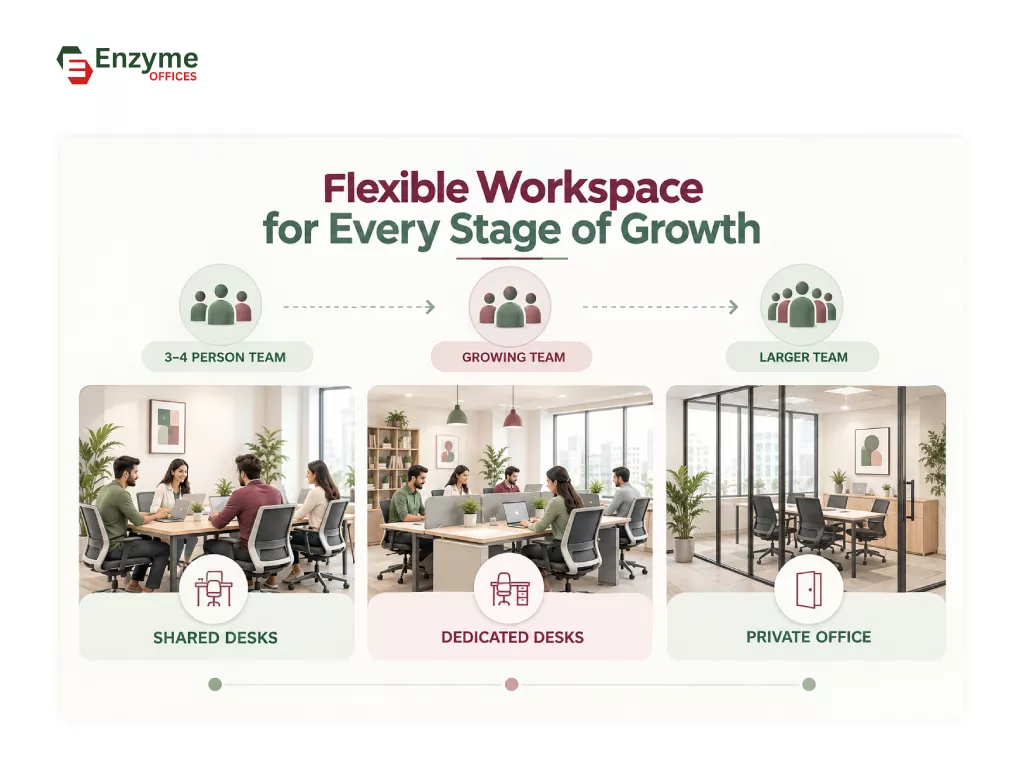
A growing startup may move through different stages:
- Shared desks for an early team
- Dedicated desks as the team expands
- Private cabins for greater privacy
- Larger managed offices for established teams
This flexibility allows businesses to adjust their workspace without fully overhauling their office infrastructure whenever their team changes.
3. Reduce costs
Office setup can require significant upfront spending. Furniture, internet connectivity, utilities, maintenance, security, meeting rooms, and workplace services can all add to the cost of running an independent office.
The average cost of coworking spaces brings many of these requirements together within one workplace. This can help startups avoid large initial investments while still providing employees with a professional environment.
The savings become more useful when a startup needs to preserve capital for product development, hiring, marketing, and customer acquisition.
Instead of investing substantial funds in office infrastructure, founders can allocate more resources to activities that contribute directly to business growth.
4. Create opportunities for networking
A coworking environment brings professionals from different companies, industries, and backgrounds into the same workplace. This creates opportunities for conversations and knowledge sharing that may not happen in a conventional office. A casual interaction with another business owner can lead to referrals, partnerships, vendor relationships, or potential customer connections.
For startups, professional networking can support:
- Business referrals
- Strategic partnerships
- Knowledge sharing
- Hiring connections
- New customer opportunities
Networking does not guarantee business results, but having regular access to a professional community increases opportunities to build valuable business relationships.
5. Spark creativity
Ideas can improve when people encounter different perspectives. A coworking environment can bring together professionals working across technology, consulting, finance, design, marketing, real estate, and other fields.
For startup founders, this diversity can provide fresh viewpoints when solving business challenges.
A conversation with someone outside your industry may help you look at a familiar problem differently. Similarly, employees can learn how other businesses approach customer service, marketing, operations, hiring, or technology.
This makes community one of the practical benefits of coworking spaces, for startups that are still developing their processes and business models.
6. Provides premium amenities
Running an office involves more than providing desks. Teams also need reliable internet, meeting areas, common spaces, power backup, security, housekeeping, and other workplace facilities.
A well-managed coworking space brings many of these requirements together in one location.
Depending on the provider, members may have access to:
- High-speed internet
- Meeting and conference rooms
- Collaboration areas
- Common lounges
- Reception services
- Parking
- Power backup
- Housekeeping
- Business support services
This reduces the amount of time founders need to spend managing day-to-day workplace operations.
7. Support work-life balance
The boundary between personal and professional life can become unclear when employees work exclusively from home. Over time, this may make it harder to establish a clear routine around working hours.
A coworking space creates physical separation between work and personal life. Employees can come to work, complete their tasks, and leave when their workday ends.
The social aspect can also reduce the sense of working alone. Informal conversations, shared spaces, and community activities can provide opportunities for interaction throughout the day.
For startups with distributed or hybrid teams, a professional workspace gives employees an alternative to working from home.
8. Professional image
First impressions matter when startups meet customers, investors, candidates, and business partners. A professional workspace can provide an appropriate setting for important meetings and presentations.
Meeting a potential client in a dedicated conference room can create a different experience from meeting in a crowded café or relying entirely on video calls.
A professional workspace can also support your company’s image through:
- Professional meeting areas
- Business-appropriate surroundings
- Reception facilities
- Dedicated workspaces
- A consistent workplace for client interactions
For early-stage companies, these details can help present the business with greater confidence while the brand is still developing.
9. Reduce isolation
Remote work offers flexibility, but working alone every day can become isolating. Freelancers, consultants, and remote employees may have limited opportunities for face-to-face interaction during the working week.
Coworking spaces provide an alternative environment where professionals can work independently while remaining surrounded by other people.
This balance can be useful for individuals who want quiet time for focused tasks but also value opportunities for professional interaction.
For startups managing remote or hybrid teams, coworking memberships can also provide employees with access to a workplace when home is not the right environment for concentrated work.
10. Professional business mindset
The environment surrounding your team can influence how employees approach their responsibilities. A dedicated workplace creates a stronger distinction between personal time and business activities.
For founders, entering a professional workspace can also reinforce the discipline required to manage an early-stage company. Employees can establish clearer routines, follow regular working hours, and collaborate in an environment designed for professional activity.
This can be useful when a startup transitions from an informal early-stage setup into a more structured business.
A professional workspace can support accountability, focus, collaboration, and disciplined execution without making the company feel overly formal.
11. Strengthen brand identity
Your workplace integrates how employees experience your company. As startups grow, maintaining a shared company culture becomes increasingly important.
A coworking environment can support brand identity by providing employees with a shared physical space where they collaborate, communicate, and build relationships.
Startups can also create a stronger sense of identity through:
- Branded work areas
- Team collaboration spaces
- Private offices or cabins
- Consistent meeting environments
- Internal team activities
When the workspace reflects the company’s values and working style, employees can develop a stronger connection with the business.
Coworking compared with a home Office and traditional office
Choosing between coworking, traditional office, and working from home depends on your team’s size, budget, and working model.
| Factor | Coworking Space | Home Office | Traditional Office |
| Initial setup cost | Lower | Low | High |
| Flexibility | High | High | Usually lower |
| Professional meeting space | Available | Limited | Available |
| Networking opportunities | High | Limited | Depends on location |
| Workplace amenities | Usually included | Self managed | Business managed |
| Scalability | High | Limited to teams | Can require relocation |
| Office management | Provider managed | Self managed | Business managed |
| Community interaction | High | Low | The team |
For many early-stage companies, coworking offers a middle ground between the low infrastructure of working from home and the higher commitment of maintaining an independent office.
Suggested Reading: Difference Between Coworking Space and Traditional Office
Who benefits most from coworking?
Coworking spaces can support multiple professionals, but certain groups may gain more value from the model.
- Startups and founders: Flexible workspace options allow growing teams to avoid committing to more space than they currently need.
- Freelancers and consultants: Shared workspaces offer a professional environment, meeting facilities, and opportunities to connect with other professionals.
- Remote employees: Coworking can provide an alternative to working from home when employees need a dedicated workplace.
- Small businesses: Teams can access professional office infrastructure without managing every workplace service independently.
- Growing companies: Flexible workspace arrangements can make it easier to add workstations or move into larger spaces as the team expands.
Summing up
The right coworking space can support productivity, improve employee experience, and help in business growth while spending a significant upfront investment. A flexible workspace also reduces the operational burden associated with managing an office. Instead of spending valuable time coordinating workplace infrastructure, founders can concentrate on customers, employees, products, and growth.
If you are looking for a coworking space in Pune or Bangalore for your team, consider your team size, growth plans, meeting requirements, budget, and preferred working style before choosing a plan.
Enzyme Offices provides flexible and customized workspaces for 50 or more members based on your business needs. Contact us to discuss your office requirements..